
Social Media Strategy for Small Businesses: A Beginner’s Guide
If your current social media strategy is:
“I should probably post something today.”
You’re not alone.
For a lot of small businesses, social media becomes another task squeezed somewhere between answering emails, doing the actual job, and remembering that apparently we’re all supposed to be making Reels now.
The good news: a social media strategy doesn’t need to be complicated.
It just needs to answer a few important questions.
What is a social media strategy?
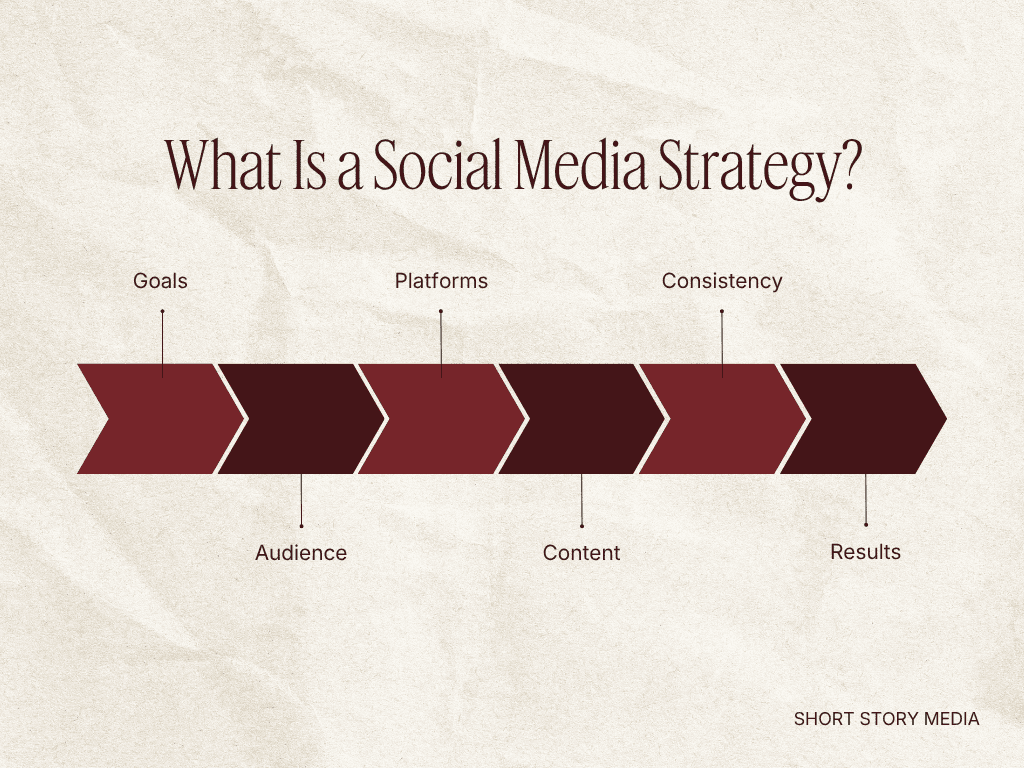
A social media strategy is the plan behind what your business posts, where you post it, who you’re trying to reach, and what you want that content to accomplish.
Basically, it’s the difference between posting to post and posting with a purpose.
A good strategy should help you answer:
- Who are we trying to reach?
- Which platforms should we use?
- What should we talk about?
- What kinds of content should we create?
- How often can we realistically post?
- What do we want people to do after seeing our content?
- How will we know if it’s working?
You don’t need a 42-page PDF.
You need clear answers.
Step 1: Know what you’re trying to accomplish
Before deciding what to post, decide what social media needs to do for your business.
Maybe you want to:
- Build brand awareness
- Reach more local customers
- Generate inquiries
- Sell products
- Drive website traffic
- Establish yourself as an expert
- Grow a community
- Stay top of mind with existing customers
You can have more than one goal, but trying to accomplish everything with every single post usually creates content that accomplishes very little.
Different posts can have different jobs.
One might introduce you to new people.
Another might teach something.
Another might build trust.
Another might directly sell.
That’s normal.
Step 2: Know who you’re talking to
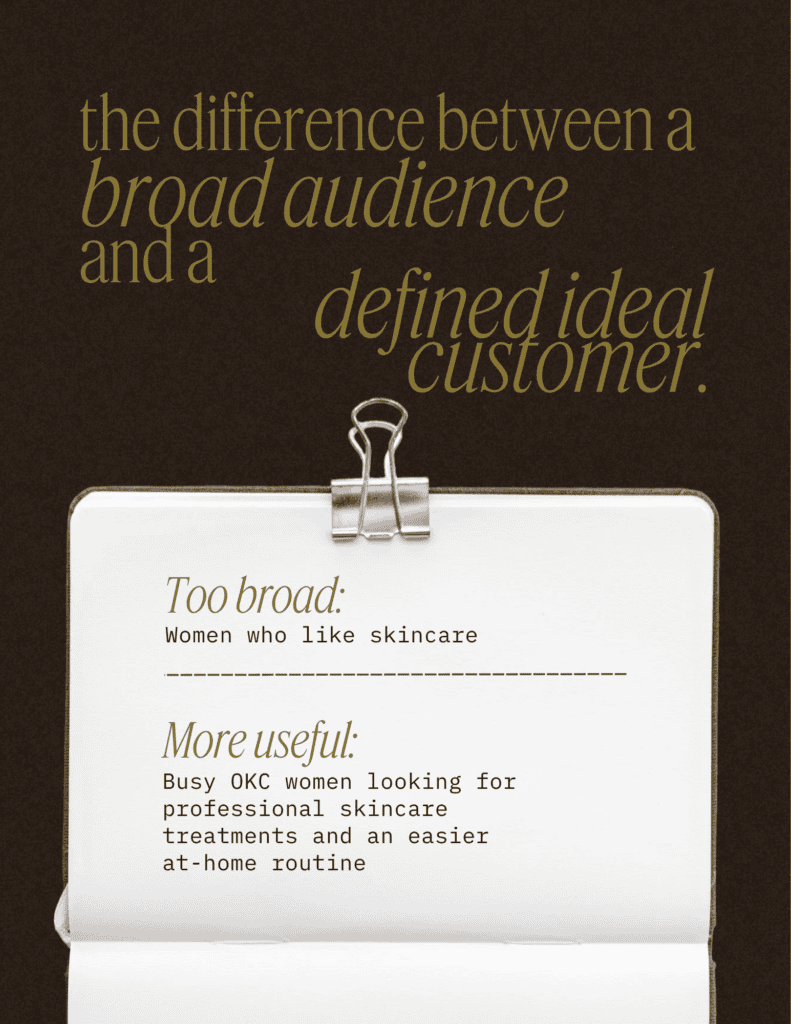
“Everyone” is not a particularly useful target audience.
You need to understand the people most likely to need what your business sells.
What questions do they ask?
What problems are they trying to solve?
What would make them choose you?
What do they already understand about your industry, and what do you need to explain?
This is also where your content language matters.
If your ideal customer doesn’t know industry jargon, don’t build your entire strategy around speaking to them like they attended the same conference you did.
Sometimes the best content is simply answering the questions your customers ask you every week.
Step 3: Choose the right platforms
You do not need to be everywhere.
Choose platforms based on:
- Where your audience actually spends time
- What kinds of content you can realistically create
- Your business goals
- Your available time and resources
Being consistently useful on two platforms is generally better than maintaining six accounts you resent.
And remember that different platforms can have different jobs.
Instagram might help someone discover and get to know your brand.
Pinterest might drive long-term search traffic.
LinkedIn might establish professional authority.
TikTok might introduce you to an entirely new audience.
Pick platforms intentionally, not because someone online told you your business will cease to exist if you don’t join the newest one by Friday.
Step 4: Decide what you’re going to talk about
This is where content pillars can help.
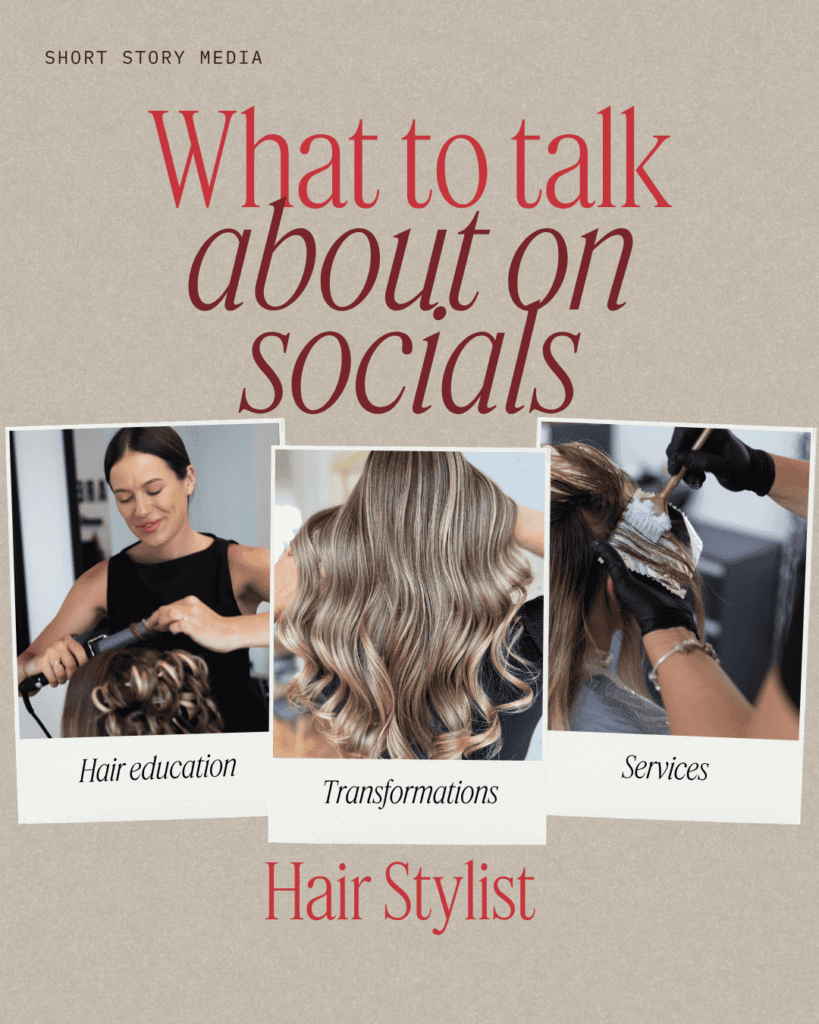
Content pillars are simply the recurring topics your business creates content around.
For example, a hairstylist might talk about:
- Hair education
- Transformations
- Services
- Products
- Stylist personality and behind-the-scenes content
A realtor might focus on:
- Local neighborhoods
- Buying and selling education
- Listings
- Market information
- Life in their city
Your pillars should live somewhere between what your audience wants to know and what makes sense for your business to be known for.
If a topic gets attention but has absolutely nothing to do with what you sell, that attention may not be particularly valuable.
Step 5: Create different types of content
If every post says BUY THIS, people learn very quickly how to scroll past you.
Your strategy should include a mix.
Educational content answers questions and demonstrates expertise.
Discovery content gives new people a reason to stop, watch, or share.
Trust-building content shows your experience, process, personality, results, reviews, or perspective.
Promotional content clearly explains what you sell and gives people a next step.
You don’t need a perfect percentage for each.
You just need enough variety that your audience understands both why they should follow you and why they should eventually buy from you.
Step 6: Choose a posting schedule you can actually maintain
There is no universal perfect number of posts per week.
Posting more can create more opportunities to reach people, but frequency isn’t useful if the quality falls apart or you disappear entirely after two weeks because your content calendar tried to kill you.
Start with what you can consistently maintain.
Then adjust based on your goals, resources, and results.
A realistic strategy you actually execute will beat the perfect strategy sitting untouched in a Google Doc.
Step 7: Tell people what to do next
Not every post needs a hard sell.
But your audience shouldn’t have to conduct an investigation to figure out how to work with you.
Sometimes the next step is:
Save this.
Send this to someone.
Follow for more.
Read the full article.
Visit the website.
Book an appointment.
Send an inquiry.
A good call to action simply makes the next logical step clear.
Step 8: Pay attention to what’s working
Your strategy isn’t finished once you start posting.
Look at your analytics.
Which content reaches new people?
What gets shared?
What gets saved?
What generates profile visits, website clicks, inquiries, or sales?
And equally important: what isn’t working?
Don’t judge every post solely by likes. A post with fewer likes might generate more website clicks or inquiries than the one that reached thousands of people.
Measure performance against the job the content was supposed to do.
Then use what you learn to make the next round better.
Your strategy should make social media easier, not harder
A social media strategy isn’t supposed to give you another complicated system to maintain.
It’s supposed to remove some of the daily decision-making.
Instead of opening Instagram and wondering what on earth you’re supposed to post, you already know:
who you’re talking to, what you’re talking about, why you’re posting, and what you want the content to accomplish.
That’s the strategy.
The posting comes after.


