
Social Media SEO: How to Make Your Content Easier to Find
Social media isn’t just somewhere people scroll anymore.
It’s somewhere they search.
People use Instagram, TikTok, Pinterest, YouTube, and other platforms to find restaurants, products, tutorials, recommendations, local businesses, reviews, inspiration, and answers to extremely specific questions.
Which means SEO isn’t just a website thing anymore.
First: what is SEO?
SEO stands for Search Engine Optimization.
In normal-person language, it’s making it easier for a search engine or platform to understand what your content is aboutso it can show that content to people looking for it.
For example, if you’re an Oklahoma City wedding photographer, you probably want the internet to understand that from your content.
Not just:
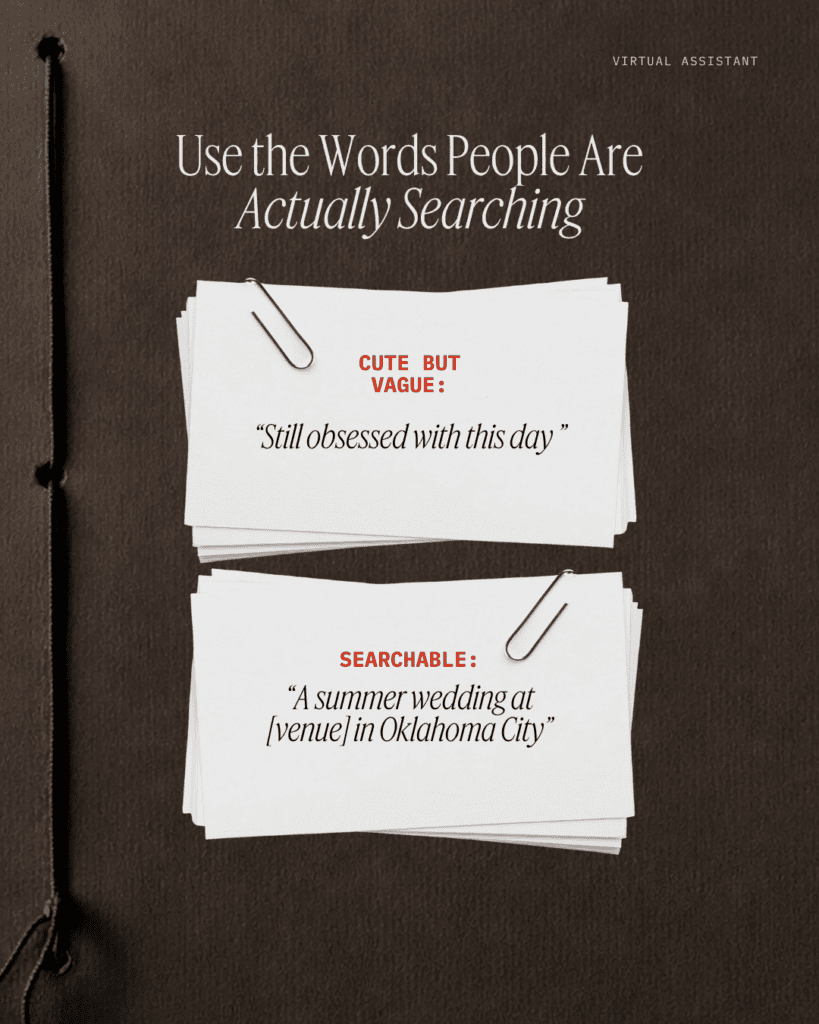
“Still obsessed with this day 🤍”
Cute.
But not particularly informative to someone searching for an Oklahoma City wedding photographer.
That’s where social media SEO comes in.
How does social media SEO work?
Social platforms use information from your account and content to understand what you’re talking about.
That can include things like:
- Your name and username
- Your bio
- Captions
- Keywords
- On-screen text
- Video topics
- Locations
- Hashtags
- Alt text and other content information
- The overall subjects you consistently talk about
The goal isn’t to cram the same keyword into every available corner of your post.
It’s to give the platform enough context to confidently understand:
This is what this content is about, and this is who might find it useful.
Use the words people are actually searching
One of the easiest ways to improve your social media SEO is also one of the least exciting:
Say what you do.
If you’re a hairstylist specializing in lived-in blondes in Oklahoma City, those words matter.
If you’re creating a Reel about Japanese head spas, say Japanese head spa.
If you’re explaining how to improve iPhone video quality, use phrases like iPhone video quality and iPhone camera settings.
Your audience doesn’t necessarily search using your clever branded language.
They search for the thing they need.
You can still have personality. Just don’t make people solve a riddle to figure out what your business does.
Put keywords in useful places
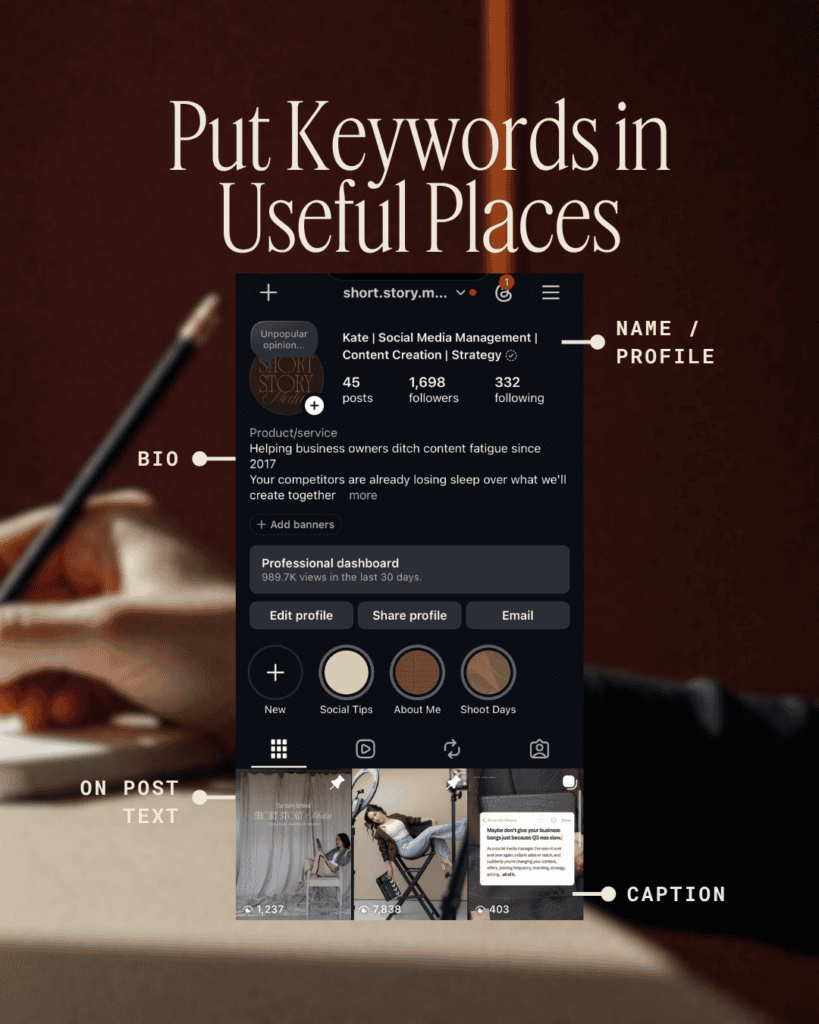
Your primary topic should naturally appear in places that help both the platform and the human understand your content.
Think:
Your profile: What do you do? Who do you serve? Where are you located if location matters?
Your caption: Clearly describe what the post is about.
Your on-screen text: Give the video or Reel an obvious topic.
Your title or cover: Tell someone what they’re about to learn.
Your spoken content: Actually talk about the subject you’re trying to be known for.
You don’t need every possible keyword in every possible location.
Clarity beats keyword soup.
Social SEO matters even more for local businesses
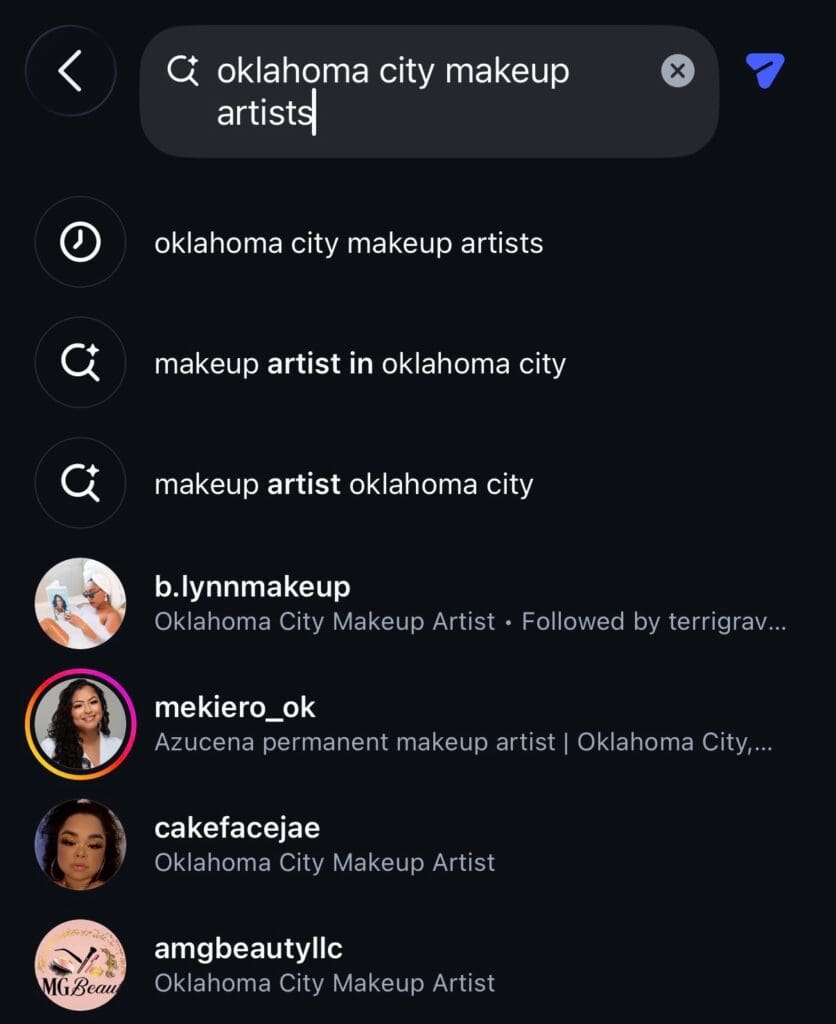
If someone searches for:
head spa in Oklahoma City
OKC wedding photographer
social media manager in Oklahoma City
…location becomes part of the search intent.
That means local businesses should make their location clear when it’s relevant.
Use it naturally in your profile, captions, content topics, location information, and website.
You don’t need to write OKLAHOMA CITY OKC OKLAHOMA CITY BUSINESS OKC BUSINESS underneath every Reel.
Please don’t.
We can tell.
What about hashtags?
Hashtags can still provide context and categorization, but I wouldn’t build your entire social SEO strategy around them.
A post should make sense without relying on 30 hashtags to explain what it’s about.
Think of hashtags as supporting information rather than the whole strategy.
Your actual content, words, profile, topic, and messaging should be doing the heavier lifting.
Social media and Google are getting closer
This is one of the reasons I’m paying so much attention to social SEO.
The line between social search and traditional search is getting blurrier.
Your website isn’t the only digital content that can help someone discover you. Public social content can surface through search engines too, giving businesses another reason to create posts around topics people are actively looking for.
Which means that Reel you made isn’t necessarily finished working the day after you post it.
Searchable content has the potential to keep answering someone’s question later.
That’s a very different way to think about social media than chasing 24 hours of reach.
Start with the question, not the algorithm
If you want to make your social media content easier to find, start by asking:
What would someone type if they needed the information in this post?
Then make sure your content actually answers that question.
Use clear language.
Include relevant keywords naturally.
Give the platform context.
Make your location obvious when it matters.
And create content around questions people genuinely ask.
Social media SEO doesn’t need to mean writing for robots.
Really, it’s the opposite.
Make it painfully easy for both the platform and the person searching to understand exactly why your content is the answer they’re looking for.


